Finding Motivation When You’ve Lost It (What’s the Point?)
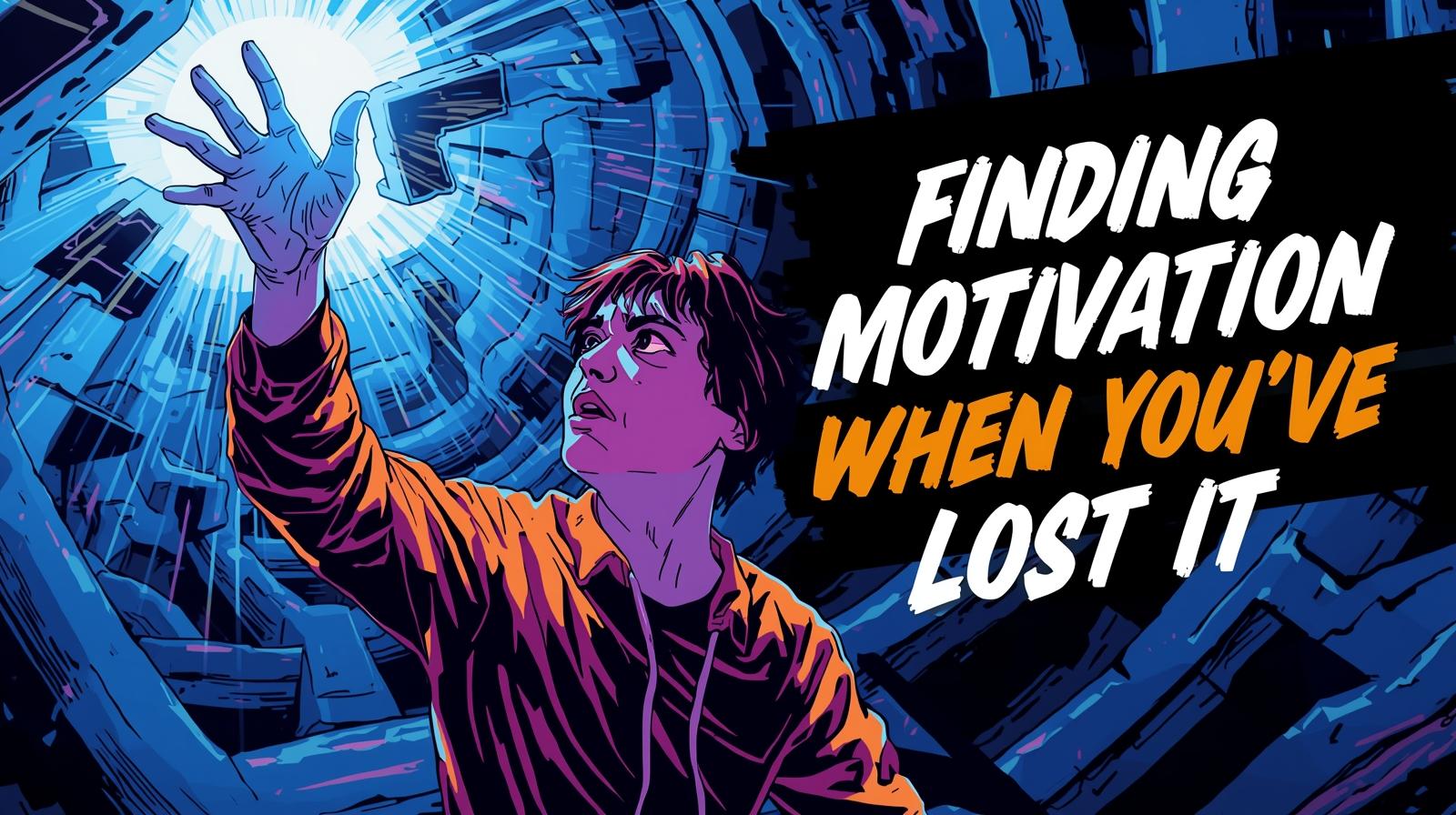
There are moments where your motivation just… disappears. You know exactly what you “should” be doing. You might even want to do it. But the drive? Gone. You sit there thinking, What’s the point?
You tell yourself you’ll reply to those messages, but instead you leave people on read and let the guilt slowly build. You promise yourself you’ll finally sort out your room, but the pile of clothes on the chair manages to survive another week. You keep saying you’ll pick up your guitar, your sketchbook, or your college application, and yet somehow you don’t touch any of it.
Here’s the truth: losing motivation doesn’t make you lazy — it makes you normal.
Motivation isn’t a switch you flick on. It’s something you have to rebuild over and over again, especially after life has knocked the wind out of you. And that’s exactly what today’s blog is about. We’re breaking down why motivation disappears, why waiting until you “feel ready” is a trap, and three practical ways to spark your drive when you feel completely empty.
Let’s get into it.
Want to listen on your preferred podcast app instead?
Why Motivation Disappears
Motivation doesn’t vanish out of nowhere. When you look closely, it’s usually being smothered by something deeper.
Overload
Sometimes you’ve just got too much going on — schoolwork, messages, part-time shifts, family pressure, social stress. When everything demands attention at once, your brain freezes. It’s not laziness. It’s your nervous system saying, “Too much. Can’t decide. Shutdown.”
Fear
Maybe you want to post your art online, apply for a job, or talk to someone you like, but fear of judgment kicks in. Doing nothing feels safer than risking embarrassment or rejection.
Disconnection
Sometimes the spark fades simply because you’ve forgotten why something matters. The guitar that excited you two months ago now gathers dust because you’ve lost sight of the reason you picked it up. The energy is gone because the meaning is gone.
When motivation disappears, most people jump straight to, “I’m just lazy.”
But laziness is almost never the real problem. It’s overload, fear, or disconnection wearing a disguise.
So pause and ask yourself:
The last time you lost all motivation… which of these was actually behind it?
The Trap of Waiting to “Feel Motivated”
One of the biggest lies your brain will ever tell you is this:
“I’ll do it when I feel motivated.”
But motivation doesn’t show up first.
Motivation follows movement.
Think about it:
You don’t feel like tidying your room, but once you pick up that first T-shirt, you’re suddenly in motion.
You don’t feel like replying to someone, but once you send the first “hey,” the conversation starts.
You don’t feel like drawing, but once your pencil touches the page, ideas start trickling through.
Motivation is a side effect of taking action, not the cause.
Waiting until you feel ready is like waiting until you feel fit before you start exercising. You’ll wait forever.
So the better question isn’t:
“Do I feel motivated?”
It’s:
“What’s the smallest step I can take right now to spark motion?”
Motivation Is Tied to Meaning
Motivation doesn’t just come from action — it comes from purpose. When your why gets blurry, your motivation evaporates.
Filling out a college application feels pointless if you’re only doing it because you “should.”
But if it’s tied to studying something you care about or getting closer to independence, suddenly there’s a real reason behind it.
Practising endless music scales is exhausting if it’s just about “getting better.”
But if it’s about playing that one song you want a friend to hear, or proving to yourself that you can perform live — that’s a why.
Dragging yourself into a part-time job is draining if it’s just money.
But if that money is funding driving lessons, saving for a trip, or moving out, it stops being a chore. It becomes a stepping stone.
A strong why gives motivation a reason to show up.
A weak or borrowed why guarantees the spark dies.
So ask yourself:
If I actually did the thing I’m avoiding… what bigger win would it give me?
How to Reignite Your Motivation
Motivation isn’t magic — it’s maintenance. It’s something you rebuild piece by piece. And the strategies below will feel familiar, because motivation connects everything we’ve talked about this season: setbacks, sabotage, readiness. This is where the threads tie together.
1. Borrow From Your Future Self
You’ve heard this one before, but now we’re taking it deeper.
When you’re exhausted or stuck, your brain gets trapped in the “now” version of you — the tired you, the overwhelmed you. But motivation lives with the future you. The version who’s already done the hard bit and is standing on the other side feeling relieved, confident, and grateful.
So when you feel that “I can’t be bothered” fog settling in, do this:
Close your eyes and picture the future version of you — not perfect, not superhuman — just a little further along.
What does their life look like because you chose action today?
What doors opened?
What stress eased?
That’s who you’re working for.
That’s where the fuel comes from.
Motivation isn’t about pushing hard — it’s about remembering who you’re becoming.
2. Change Your State, Not Your Thoughts
When people lose motivation, they go to war with their minds. They argue with themselves, guilt-trip themselves, bargain, shame, negotiate. And guess what? It rarely works.
You can’t think your way out of a flat mood.
But you can move your way out of it.
Your body is the ignition key.
Move even a little — stretch, walk, put on a song and shake your limbs around — and your brain chemistry shifts. Dopamine increases. Oxygen flows. You wake up.
Even something as simple as:
sitting upright,
rolling your shoulders back,
taking a deep breath into your ribs
can break the mental deadlock.
It’s like shaking a snow globe.
The picture is the same — but suddenly there’s life in it again.
Don’t chase motivation.
Reset your state.
3. Create Micro Momentum
When motivation disappears, big goals feel impossible. So stop trying to climb the whole mountain — just start rolling a few pebbles.
Micro momentum is about building three tiny wins in a row:
Reply to one message.
Tidy one corner of your room.
Pour a glass of water and drink it.
That’s it. Back-to-back.
Not for productivity.
Not for results.
To send your brain this signal:
“I’m in motion again.”
The brain loves progress, even tiny progress.
Micro momentum doesn’t care what you do — only that you start.
The Awkward Spark: The Moment Progress Feels Wrong
There’s a moment no one talks about — the moment you finally push yourself to start again… and it feels awful.
You hit send on a job application and instantly regret it.
You pick up your guitar and your fingers feel stiff and clumsy.
You try to write and every sentence sounds terrible.
That’s the awkward spark.
It’s small.
It’s uncomfortable.
It rarely feels inspiring.
But it’s the moment your brain wakes up again.
All the circuits that thrive on effort and reward begin switching back on. Like turning on old lights — they flicker before they shine.
Awkwardness isn’t a sign you’re doing it wrong.
It’s the proof you’ve started.
Awkward means alive.
Your spark doesn’t return before you act — it returns because you acted.
Bringing It All Together
Motivation disappears for reasons — overload, fear, or losing your why.
Waiting to “feel ready” is a trap.
Action creates motivation, not the other way around.
And now you’ve got three ways to build it back:
Borrow from future you — the version of you who’s grateful you tried.
Change your state — movement wakes the brain.
Use micro momentum — three tiny wins to reboot your system.
The spark always comes back — but it won’t find you sitting still.
It finds you in motion.
So here’s your challenge for this week:
Pick one thing you’ve been avoiding.
Shrink it to the smallest possible step.
Write down your real why — yours, not anyone else’s.
And before you give up, ask:
“What would future me thank me for?”
Motivation isn’t missing.
It’s something you rebuild, spark by spark.
Next Episode: Staying Focused in a World That Pulls You Everywhere
Even once motivation returns, life doesn’t make it easy to keep it. Notifications, drama, distractions — everything around you is designed to pull your attention away.
So in the next episode, we’re going into how to stay focused and stop getting distracted, because finding your spark is step one… but keeping it burning is how you actually change your life.
See you there.

Creator, author and host.
I’m a Qualified/Certified Mental Health Nurse with over 35 years of experience supporting young people and their families. I’ve worked in secure hospitals, eating disorder units, and CAMHS crisis teams—walking alongside adolescents during some of their toughest moments.
My focus has always been on helping young people in emotional distress—especially those who struggle to engage or are finding it hard to stay safe.
I also teach at universities and train professionals across health, education and social care to better understand what young people really need from us.
Headstraight brings all of that together. Just real conversations, grounded advice, and ideas that might actually help. That’s the goal: make it easier to understand, easier to talk about, and more useful to you in real life.

You Don’t Need to Control to Lead