Why Do I Always Feel Behind in Life?
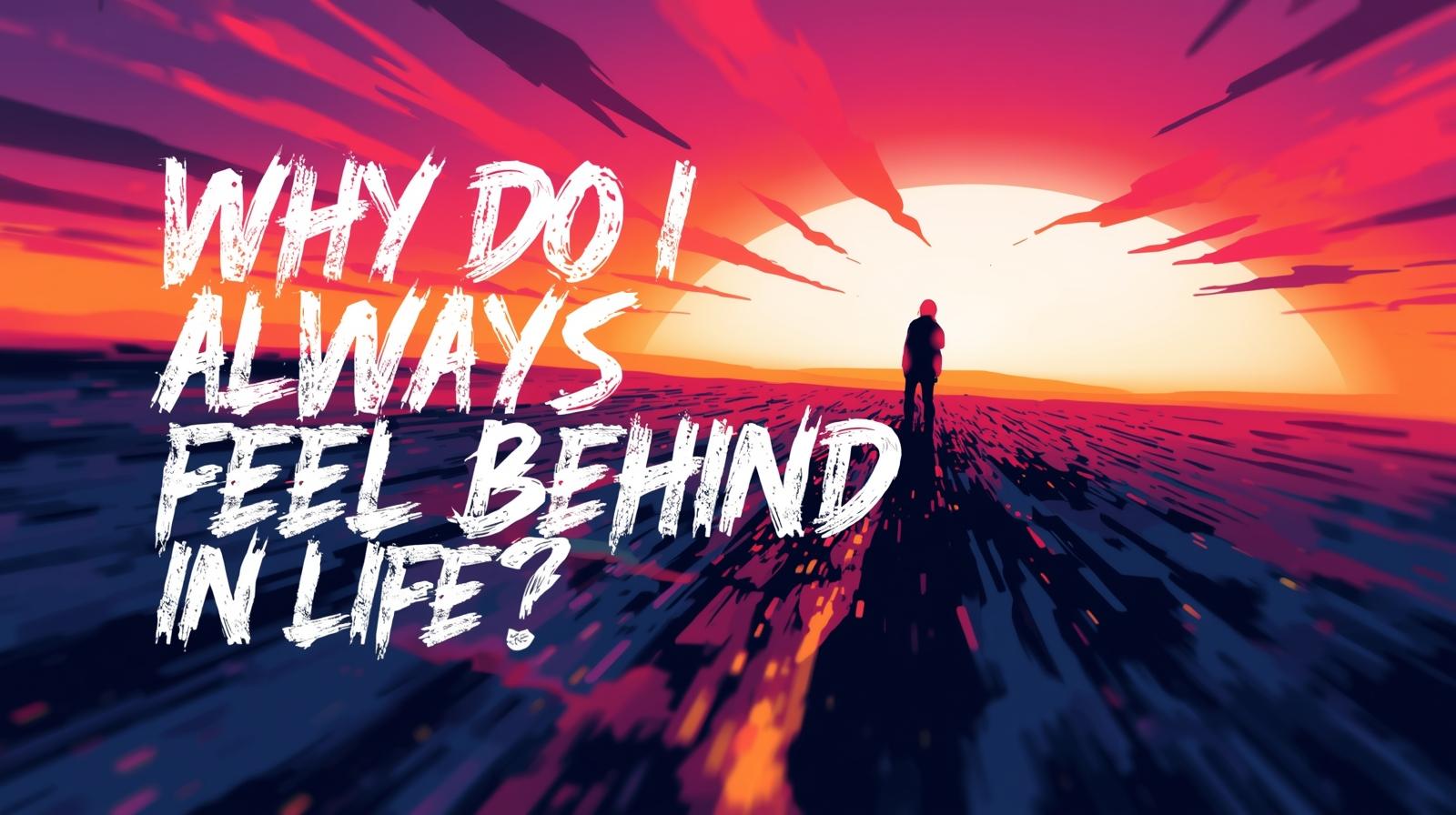
We’ve all had those moments where it suddenly feels like everyone else is miles ahead while you’re still trying to get your shoes on. Your mates are getting uni offers or lining up jobs. People online seem to be building businesses, sculpting six packs, or living dream lives. Even family might drop well-meaning hints about where they think you should be by now. And in the middle of all that noise, you find yourself thinking, “I’m falling behind. I should be further ahead than this.”
But here’s something most people never pause to consider: maybe you’re comparing yourself to timelines and expectations that were never yours to begin with.
In this episode, we’re digging into why that “behind” feeling hits so hard, how comparison and expectation distort your self-worth, and the tools that help you reset your pace so you actually build a life that feels right for you. Because the truth is, you’re not behind at all — you’re exactly where you need to be.
Want to listen on your preferred podcast app instead?
Why the Feeling Appears: Comparison + Expectation
That heavy feeling doesn’t appear out of nowhere. It comes from two powerful forces pulling at you every day: comparison and expectation.
Comparison
Your brain is wired to compare. It’s an ancient survival tool meant to help you figure out whether you belong, whether you’re keeping up, and whether you’re safe. But in today’s world, comparison doesn’t stop with your mates. It stretches across the entire internet.
You see your friend get their first car while you’re still walking or on buses.
You see someone showing off part-time wages while you’re struggling to get a job.
You see creators your age building brands, careers, or huge followings.
Your brain takes all of that in but only sees the highlight reel — the best moments, the curated wins, the filtered life. It completely ignores the 99% you never see: the stress, the failures, the hours of practice, the nights of doubt.
And the conclusion it draws is always the same:
“They’re ahead. I’m behind.”
Expectation
Then there are the expectations — the invisible rules that come from parents, teachers, culture, and even your friendship group.
Parents asking, “So what’s the plan after school?”
Teachers warning you that bad grades mean you’ll fall behind.
Friends acting like you should have certain things figured out already.
Each one adds another brick to the backpack you’re carrying. One brick is fine. Ten bricks become overwhelming.
Comparison shows you where others are.
Expectation tells you where you should be.
Together, they create a constant whisper:
“You’re not enough. You’re late. You’re behind.”
Take a moment to reflect:
The last time you felt behind, did it come from looking sideways or from trying to meet someone else’s expectations?
Why Comparison Is a Trap
Comparison might feel natural — because it is — but it’s also completely stacked against you.
1. You’re Comparing Your Reality to Their Highlights
Social media is a shop window. People show you their best moments and hide the messy ones. You see perfect relationships, not the arguments. You see exam celebrations, not the breakdowns. You see success, not the failures that came before it.
You compare your unfiltered, behind-the-scenes life with someone else’s carefully chosen highlight reel — of course it feels like you’re behind.
2. The target always moves
The moment you think you’ve caught up, someone else is already further ahead.
You land a job…
then someone your age starts a business.
You pass your driving test…
then someone else buys a car.
You finally feel proud…
then you scroll and feel behind again.
It's a finish line that keeps shifting, meaning you can never win.
3. You’re not even running the same race
Everyone is on their own path. Different start points. Different detours. Different challenges. When you look sideways, you forget that the race you’re running has nothing to do with the people in the lanes next to you.
4. Comparison steals your joy
You ace a test. Instead of celebrating, you think,
“Yeah, but my mate did better.”
Your win gets overshadowed because someone else’s success has hijacked it.
You can't enjoy your progress if you’re constantly measuring it against someone else’s.
The Pressure of “Shoulds”
If comparison is looking sideways, “shoulds” are the voices pushing from behind.
From childhood, people tell you what you should be doing.
What you should know by now.
What you should have achieved.
Who you should have become.
Society hands you a rigid timeline:
School → Uni → Career → House → Family → Retirement → Death.
And if you don’t match that timeline, the message becomes:
“You’re behind.”
But here’s the shift:
Should is what others expect. Want is what matters to you.
Until you separate them, you’ll always feel like you’re letting someone down — often yourself.
Four Ways to Reset Your Pace
The good news? You can’t stop comparison and pressure from showing up, but you can choose how you respond. Here are four ways to reclaim your pace.
1. Run Your Own Race
Life isn’t a 100-metre sprint where everyone starts at the same line. It’s a marathon with different start points, detours, breaks, and setbacks.
Your mate might be at mile 10.
You might be at mile 3.
That doesn’t mean you’re behind — it means your route is different.
When you stop looking sideways, you give yourself permission to grow at your own pace.
2. Redefine What Progress Looks Like
Most people define progress using someone else’s checklist. But real progress is simply moving in the direction that matters to you.
Instead of “I should know my career already,”
try “I’m exploring what fits me.”
Instead of “I should have it all together,”
try “I’m learning, step by step.”
Growth doesn’t have to look polished to be real.
3. Change Your Feed
If your social media leaves you feeling insecure, change it. Follow people who talk honestly about struggles and growth, not just the picture-perfect bits.
Your brain compares what it sees — so give it something healthier to work with.
4. Zoom Out
When you’re zoomed in on one bad week, everything feels catastrophic. But zoom out and things look very different.
Missed a grade?
It won’t define your whole future.
Fell out with a friend?
Relationships change and repair.
Made a mistake?
You’re human.
When you zoom out, you see the full picture — not just the one moment that scared you.
You’re Not Behind — You’re Growing
The whole idea of being behind in life is an illusion. Behind compared to who? Behind compared to what timeline? There is no standard route that everyone must follow.
Life doesn’t unfold in a straight line. It loops. It pauses. It reroutes. It evolves.
Some people know their passion at 15.
Some don’t discover it until 40.
Some find love young.
Some find it later.
Some take years to bloom — and that doesn’t make them late.
Think of life like a garden.
Some plants bloom in spring.
Some in summer.
Some take years to flower.
You would never look at a sunflower and tell it it’s “behind” the roses.
So why do it to yourself?
You’re not behind.
You’re not failing.
You’re growing along your own timeline.
The real question isn’t “Am I behind?”
It’s “Am I building a life that feels like mine?”
Bringing It All Together
You feel behind because comparison and expectation distort how you see yourself. You’re comparing your full story to someone else’s highlights and carrying timelines that were never designed for you.
But now you have tools to reset your pace:
Run your own race
Redefine progress
Change what you feed your brain
Zoom out
So here’s your challenge for the week:
Write down one area where you feel behind.
Then ask yourself:
“Behind compared to who? Behind compared to what?”
If the answer isn’t your own timeline, let it go.
Replace it with one small step that matters to you this week.
Next Episode: What Does Success Really Look Like?
Even when you stop comparing yourself to others, another question often creeps in:
“So… what does success actually look like for me?”
In the next episode, we explore why so many people chase someone else’s definition of success, how to spot when you’re living by someone else’s script, and how to define success on your own terms.
Because success isn’t about ticking boxes — it’s about building a life that feels like yours.

Creator, author and host.
I’m a Qualified/Certified Mental Health Nurse with over 35 years of experience supporting young people and their families. I’ve worked in secure hospitals, eating disorder units, and CAMHS crisis teams—walking alongside adolescents during some of their toughest moments.
My focus has always been on helping young people in emotional distress—especially those who struggle to engage or are finding it hard to stay safe.
I also teach at universities and train professionals across health, education and social care to better understand what young people really need from us.
Headstraight brings all of that together. Just real conversations, grounded advice, and ideas that might actually help. That’s the goal: make it easier to understand, easier to talk about, and more useful to you in real life.

You Don’t Need to Control to Lead