Why Am I Always Broke — Even When I’m Trying?
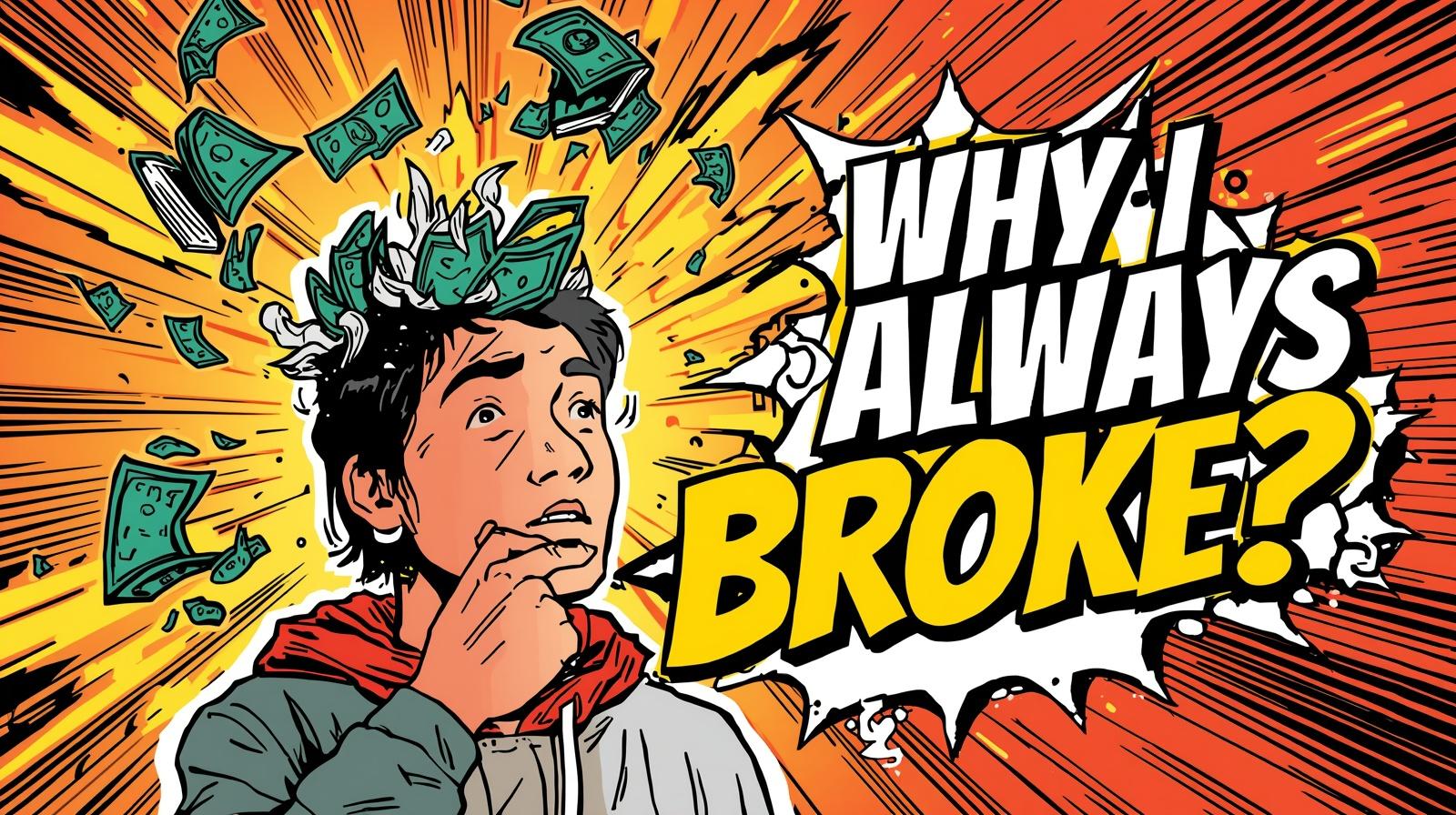
Money has a strange way of getting into your head.
Not just practically, emotionally as well.
People talk about money all the time in a surface-level way. Paying bills. Earning a living. Managing finances. But very few people talk honestly about what financial pressure actually feels like when you’re living inside it every day.
Because most of the time it’s not dramatic.
It’s subtle.
It’s checking your bank balance before agreeing to plans.
It’s mentally calculating what’s left before payday.
It’s that sinking feeling when a payment goes out that you forgot about.
It’s quietly wondering how your money disappears so quickly even when you’re genuinely trying to stay on top of things.
And after a while, the pressure stops feeling like a situation and starts feeling personal.
That’s usually where the real problem begins.
Want to listen on your favourite podcast app?
When Money Stops Feeling Practical
I think one of the reasons money hits people so hard at this stage of life is because it becomes tied to identity without them even noticing.
Before, money sat more in the background. It was something adults worried about. Something that came and went around you. But eventually it becomes your responsibility. Your bills. Your rent. Your choices. Your mistakes. Your consequences.
And once that shift happens, money quietly becomes a measure of how you think you’re doing in life.
Am I managing properly?
Am I falling behind?
Why does everyone else seem more sorted than me?
Those thoughts often sit quietly underneath everything else, but they carry weight. Because comparison always makes practical problems feel personal. Instead of thinking, “Money is tight right now,” people start thinking, “I’m bad at this.”
That’s a completely different kind of pressure.
The Cycle People Quietly Fall Into
What makes this harder is that financial stress often creates avoidance.
Not dramatic avoidance. Small avoidance.
You stop checking your balance properly.
You put off looking at what’s going out.
You tell yourself you’ll deal with it properly next week.
You avoid opening the banking app because you already know it’s going to make you feel stressed.
And honestly, that avoidance makes sense for a while because if you’re not looking directly at the problem, you get temporary relief from the anxiety attached to it.
But eventually reality catches back up again.
A payment goes out.
Something unexpected happens.
You realise things are tighter than you thought.
Then suddenly the guilt kicks in.
“I shouldn’t have spent that.”
“Why do I keep doing this?”
“I need to sort myself out.”
And this is where people usually become far harsher with themselves than they realise.
Why Shame Makes Money Harder To Manage
The difficult thing about financial stress is that once shame gets attached to it, it becomes much harder to deal with clearly.
Because now you’re no longer just dealing with money.
You’re dealing with what money makes you feel about yourself.
That changes everything.
Every spending decision starts carrying emotional weight.
Spend money and you feel guilty.
Don’t spend money and you feel restricted.
Think about money and you feel stressed.
Eventually people often fall into one of two extremes:
Either trying to control every penny obsessively or avoiding the whole thing altogether.
Neither usually works long term because both approaches are driven by pressure rather than understanding.
And I think this is probably the bit people need to hear more clearly:
Struggling with money does not automatically mean you’re irresponsible or failing at life.
Most people were never actually taught how to manage money properly in real-world conditions. They were just expected to somehow figure it out whilst simultaneously dealing with work, pressure, adulthood, uncertainty, and everything else life throws at them.
That’s a very different thing from being “bad with money.”
Why It Feels So Heavy
One of the reasons financial stress becomes so emotionally exhausting is because money is one of the few problems that follows you everywhere.
You can’t just switch it off for a week.
It sits in the background constantly influencing decisions, relationships, plans, opportunities, even how relaxed you feel on an ordinary day. And because people don’t openly talk about financial pressure very honestly, many assume everyone else has somehow mastered it already.
But behind the scenes, a lot more people are struggling than you probably realise.
They’re just quieter about it.
You Don’t Need To Fix Everything Overnight
I think one of the biggest mistakes people make is trying to completely overhaul everything the moment they finally face the problem properly.
That usually lasts about a week.
Extreme budgeting.
Strict rules.
Trying to suddenly become “good with money” overnight.
But long term stability rarely comes from dramatic resets. Usually it comes from awareness and small consistent adjustments.
That’s why one of the most useful things you can do is simply start looking clearly at what’s actually happening without immediately judging yourself for it.
Track what’s coming in.
Track what’s going out.
Notice your habits honestly.
Not to shame yourself.
Not to become perfect.
Just to understand your situation more clearly.
Because you cannot take control of something you refuse to properly look at.
Financial Pressure Is Not A Personal Failure
I think this is probably the most important thing underneath all of this:
Struggling financially at times does not mean you’re incapable, lazy, immature, or failing at adulthood.
Most of the time, it means you’re learning a difficult life skill under pressure whilst trying to keep everything else afloat at the same time.
And honestly? That’s hard.
So if money has been weighing heavily on you lately, maybe stop turning every financial struggle into evidence that there’s something fundamentally wrong with you.
You probably don’t need more shame.
You probably need more clarity, more honesty, and a calmer relationship with the situation you’re actually in.
Because the goal isn’t perfection.
The goal is steadiness.
And steadiness usually gets built gradually, through awareness, consistency, and small changes repeated over time — not through panic, guilt, or trying to suddenly become a completely different person overnight.

Creator, author and host.
I’m a Qualified/Certified Mental Health Nurse with over 35 years of experience supporting young people and their families. I’ve worked in secure hospitals, eating disorder units, and CAMHS crisis teams—walking alongside adolescents during some of their toughest moments.
My focus has always been on helping young people in emotional distress—especially those who struggle to engage or are finding it hard to stay safe.
I also teach at universities and train professionals across health, education and social care to better understand what young people really need from us.
Headstraight brings all of that together. Just real conversations, grounded advice, and ideas that might actually help. That’s the goal: make it easier to understand, easier to talk about, and more useful to you in real life.

You’re Doing Adult Life — So Why Doesn’t It Feel Right?