Apple Podcasts
 Spotify
 Youtube Music
 Amazon Music
 PocketCasts
 Deezer
 PlayerFM
 Podchaser
 Overcast
 Castro
 Castbox
 Goodpods
 YouTube
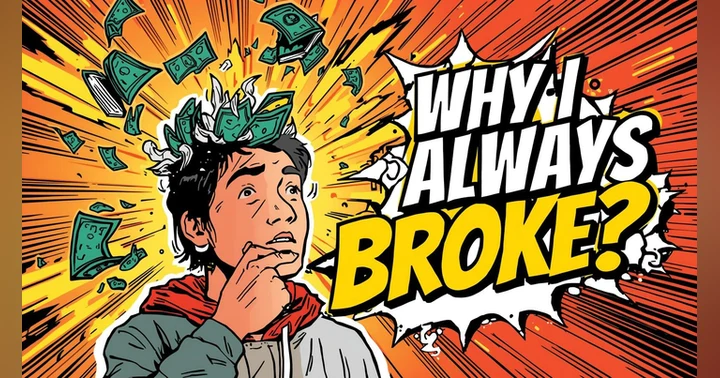
 Broke & Anxious: The Hidden Money-Mood Connection


Do you ever feel stressed about money, even when you're trying your best to stay on top of things? Financial pressure can affect far more than your bank balance, creating anxiety, self doubt and a constant feeling that you're falling behind.
In this episode of Headstraight, we explore the connection between money and mental health. You'll learn why financial stress can become a cycle, how anxiety and avoidance often make things worse and why many people develop habits around money that keep them feeling stuck.
If you're worried about money, struggling to feel in control of your finances or finding that financial pressure is affecting your confidence and wellbeing, this episode offers practical guidance to help you understand what's happening and start breaking the cycle.
Headstraight is a teen mental health podcast providing practical mental health support for teens and young people.
Want to get involved?
I’d love to hear from you:
- Send me a message → headstraight.co.uk/contact
- Leave me a voice note → headstraight.co.uk/voicemail
- Share your feedback by leaving a review (it helps more young people find the podcast) → headstraight.co.uk/reviews/new
Explore more from Headstraight:
- Read the blog version of every episode, packed with extra insights on self-sabotage, motivation, resilience, and mental health → headstraight.co.uk/blog
- Find out more about me, the host, and why I started this podcast → headstraight.co.uk/about
Need support right now?
If you’re struggling with anxiety, depression, or in crisis, visit our Resources page - https://www.headstraight.co.uk/p/resources/
for helplines, mental health services, and support options available in the UK and across the world.
Headstraight: Mental Health Support for Teens is built on honest conversations — proper Mental Health real talks that make sense in real life. Each episode brings real talk mental health guidance designed to offer steady support for teens navigating the messy, complicated parts of growing up. If you’re looking for a teen mental health podcast that gives grounded support, you’re in the right place.
Mark: My name's Mark, and you're listening to Headstraight. Hello, you lot, and welcome back. Today, we're gonna be talking about why am I always broke even when I'm trying. Because no one really tells you how heavy money feels. You hear about it, obviously, paying bills, earning a living, managing your finances, but no one really explains what it feels like when it becomes part of your everyday life.
Because it's not just about numbers. It's that constant awareness in the background, checking your balance before you buy something, hesitating before you say yes to plans, doing that quick calculation in your head. Can I actually afford this? And even when nothing's gone wrong, it's still there. That low level pressure, like you're always just a bit too close to the edge, and you might not talk about it much, but you feel it.
When you open your bank account app, when a payment goes out that you forgot about, when you realize how quickly money disappears. And then there's the question that creeps in. How am I still this broke? Especially when you're trying. You're not ignoring it.
You're not completely reckless. You're making some effort to stay on top of things, and yet it still feels like you're constantly catching up. Like no matter what you do, it doesn't quite stretch far enough. And that's where it starts to get to you because it stops feeling like a situation and starts feeling like something about you. I should be better at this.
Other people can seem to manage. Why am I doing it wrong? And you don't always say it out loud, but it sits there. That mixture of pressure, frustration, and a bit of quiet embarrassment. Because money is one of those things that people don't talk about properly.
Everyone just sort of looks like they've got it together, and you're left trying to work it out on your own. So if this is something that you've been feeling, that constant pressure in the background, that sense that you should have this sorted by now, well, you're not the only one. And more importantly, you're not failing. You're dealing with something that no one really teaches you how to handle. So why does it feel like this?
Why does money, something that should just be practical, start to feel personal? Well, it's because at this stage of your life, money just doesn't sit on the outside anymore. It starts to link directly to how you see yourself. Before, money was more in the background, Something you used, something that came when went, something that someone else was responsible for. But now?
Well, it's on you. Earning it, managing it, making it last. And that shifts how it feels, because money quietly becomes a way of measuring things. Am I doing okay? Am I keeping up?
Am I where I should be by now? And you might not say those questions out loud, but they're there in the back of your head. Especially when you look around. Other people working, spending, seeming like they've got things sorted. And whether that's actually true or not, it creates a comparison.
And comparison does what it always does. It makes things feel more personal than they really are. So instead of thinking, oh, money's a bit tight right now, it turns into, I'm not managing this properly. And that's where the weight starts to build. Because now it's not just about money, it's about how you're doing, how capable you feel, how in control you feel, whether you think you're getting this state of life right.
And when things feel tight or uncertain, it can knock that confidence really quickly, even if nothing dramatic has actually happened. And there's another layer to this as well. Money is one of the few things that you have to deal with regularly, but no one tells you how to do it. No one really sits you down and explains how to manage it when it's inconsistent, how to deal with the pressure when it's tight, and how to make decisions when there isn't a clear right answer. So you're left figuring out as you go in real time with real consequences.
And when you combine that with pressure, with comparison, with the sense that you should be getting it right by now, well, of course, it starts to feel heavy. Of course, it starts to feel personal because you're not just dealing with money. You're dealing with what it feels like to be responsible for something that you were never really shown how to handle. And once that pressure's there, it doesn't just stay practical. It starts to affect how you think, how you act, and how you deal with it day to day.
And this is where things can start to go in circles. Because once money starts to feel personal, you don't always deal with it directly. You start to avoid it, not in a dramatic way, but just in small things. You don't check your balance as often as you should. You put off looking at what's actually going out, and you tell yourself that you'll sort it properly later.
And for a bit, that works because if you're not looking at it, you don't have to feel it. But the thing is, it doesn't go away. It just sits there in the background, and then something brings it back. Maybe it's a pain that you forgot about, a message about money, a moment where you realize that things are much tighter than you thought. And suddenly, it's all there again.
The stress, the frustration, that feeling of being out of control. And so you react. Maybe you try to pull things back quickly. Maybe you tell yourself that you need to be stricter. Maybe you start thinking, right.
I need to sort this out properly. But alongside that, there's something else. There's the guilt. I shouldn't have spent like that. I knew this would happen.
Why do I keep doing this? And that guilt is what makes the whole thing harder to deal with. Because instead of just looking at what's going on, you start judging it. And once judgment comes in, avoidance usually follows again. You don't wanna feel bad about it, so you step back.
You ignore it. You distract yourself. You push it down the list. And then the cycle just repeats. Something happens.
You feel it. You react. You feel bad. You avoid it, and it builds again. The longer that goes on, the more it starts to feel like you're not in control anymore.
Like, money is something that just happens to you instead of something you're managing. And this is where a lot of people get stuck. Not because they don't care, not because they're reckless, but because the whole thing has become tied up with the pressure and the guilt. So instead of dealing with money as a practical thing, they're dealing with how it makes them feel. And that's a much harder place to operate from.
Because now every decision carries weight. Spend something, it leads to guilt. Don't spend something, it feels like restriction. Think about it, it creates stress. So it ends up feeling like there's no easy way to handle it.
And when it feels like that, it's very easy to fall into one of two extremes. Either I need to control everything, or what's the point? I'll just deal with it later. And neither of those really work long term. But here's the bit that matters.
Struggling with money like this doesn't mean that you're failing. It means that you've ended up in a loop that no one really showed you how to get out of. And once you see the loop, then you can start to step out of it. So let's steady this because it's very easy at this point to turn all of this into something about you, to look at the stress, the avoidance, and the way it's been going and land on, I'm just bad with money. But that's not what's going on here.
What you're dealing with is a mix of pressure, lack of experience, and not having been shown how to handle it properly. That's it. Because think about it. Most people don't get taught how to manage money in a real world way. Not how to deal with it when it's tight, not how to make decisions when there isn't enough, not how to stay steady when it starts to feel stressful.
You're expected to just pick it up as you go whilst also dealing with everything else that comes with this stage of life. Work, pressure, trying to figure things out. So when it feels messy, that's not a personal failure. That's what it looks like when you're learning something when you're under pressure. And there's an important difference here.
Struggling with money is not the same as failing at life. But when it gets tied into your identity, it can start to feel like that. Like it says something about your ability, your discipline, your future. And it doesn't. It just means that you're in the middle of learning a skill that has real consequences attached to it, and that's always gonna feel heavier.
So instead of looking at this as I need to be better at this, a more accurate way to see it is I'm still learning how to handle this. Not perfectly, but just better than before. And once you shift it like that, something changes. You stop approaching money from a place of judgment and start approaching it from a place of understanding, which is where things actually start to improve. Because you can't take control of something whilst you're busy beating yourself up about it.
You need a bit of space, a bit of honesty, and a bit of willingness to look at what's actually going on without turning it into a verdict about yourself. And that's where this starts to turn, not by getting everything right overnight, but by stepping out of the shame and back into dealing with it properly. So if things have been feeling like this for you, a bit messy, a bit unclear, a bit out of your hands, what actually helps? What is it that's gonna give you a bit more awareness and a bit more control? The first thing is start by actually seeing what's going on.
Not fixing it, just seeing it. Because when money feels stressful, the instinct is to avoid it. But avoidance is the very thing that keeps the pressure going. So for a few days, I want you to just track it. What's coming in, what's going out.
No judgment. Just track it. You're not trying to be good at it. You're just trying to get a clearer picture of what's actually happening because you can't take control of something that you're not properly looking at. The second thing is be honest about what your money is actually doing for you.
Not what it should be doing, but what it is doing. Because not everything you spend your money on is the same. Some things keep your life running, such as rent, food, travel, bills. That's your base. But then there's everything else, and this is where it helps to be honest with yourself.
What are you spending on because you enjoy it? What are you spending on because it makes things easier? And what are you spending on because you're stressed, bored, or just trying to feel a bit better? Again, no judgment here. You're just looking for clarity.
Because once you can see things properly, you can start to understand your habits a bit more. And that's where change actually begins. The third thing is keep your approach simple. You don't need a perfect budget. You just need a rough structure that you can work with.
What has to be covered first? What's nonnegotiable? Once that's clear, everything else becomes easier to place around it. Not perfectly, but just a bit more clearly. Because when everything's mixed together, it all feels out of control.
But when you separate it out, even roughly, then it starts to feel more manageable. And the last thing is, and this is really important, don't try to fix everything at once. That's where most people usually go wrong. They start to see the full picture, and then they try to overhaul everything overnight, and it never lasts. So instead, just focus on one shift, one small change that makes things a bit steadier.
Maybe it's checking your balance daily. Maybe it's cutting back on one thing that you've noticed. Maybe it's just being more aware before you spend. It doesn't need to be dramatic. It just needs to move things in a better direction.
Because this isn't about becoming perfect with money. It's about becoming more aware of it and more in control of how you handle it, and that's what builds over time. So if you take nothing else from this episode, I want it to be this. Struggling with money doesn't mean you're failing. It means that you're dealing with something that carries pressure that no one really teaches you about and that you're still learning how to handle.
And that's allowed to feel a bit messy because it usually is at this stage. So if things have felt out of control or a bit unclear or a bit like you should have things sorted by now, Just bring it back to something simpler. You don't need to fix everything. You just need to start seeing it more clearly without judging it, without turning it into something about you. Just seeing what's actually going on.
So here's something else to take away from this. For the next seven days, track your money. What's coming in? What's going out? That's it.
No rules. No restrictions. No trying to be better. Just getting a bit more awareness. Because once you can see it clearly, then you've got something to work with.
And that's where control starts. Not from pressure, not from guilt, from understanding what's actually happening and making small changes from there. Because you're not trying to become perfect with money. You're just trying to get a bit more steady with it, and that's gonna build over time. Now there's another part of this stage of life that can feel just as confusing because you've got responsibility now.
Bills, work, decisions, and on paper, you're doing what an adult does. And yet, it doesn't always feel like it. Like you're still figuring it out, still not quite there. So in the next episode, we're gonna break it down. We're gonna look at why you can be doing adult life and still not feel like an adult at all.
So are you up for it? Of course, you are.