Apple Podcasts
 Spotify
 Youtube Music
 Amazon Music
 PocketCasts
 Deezer
 PlayerFM
 Podchaser
 Overcast
 Castro
 Castbox
 Goodpods
 YouTube
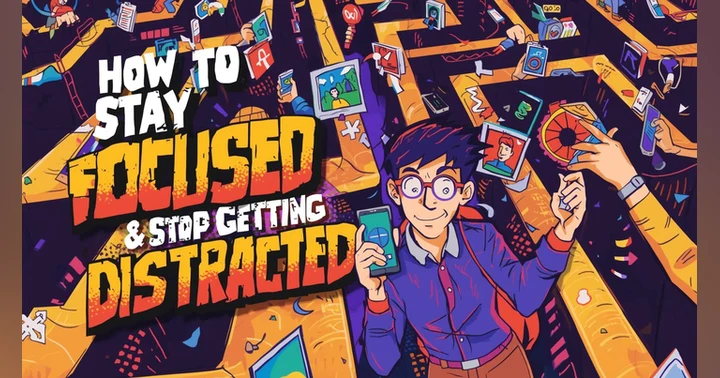
 Your Attention Is Being Stolen — Here’s How to Get It Back
Do you ever sit down to do something important, only to find yourself scrolling, clicking, checking messages or getting distracted by something else? Staying focused has become harder than ever, and it's not simply a matter of trying harder.
In this episode of Headstraight, we explore why distractions are so powerful and how modern life is constantly competing for your attention. You'll learn why focus feels more difficult than it used to, how distraction affects motivation and what happens when your attention is pulled in too many directions at once.
If you're tired of feeling distracted, struggling to concentrate or finding it difficult to stay on track with the things that matter to you, this episode offers practical teen coping strategies to help you regain control of your attention and build habits that support better focus.
Headstraight is a teen mental health podcast providing practical mental health support for teens and young people.
Want to get involved?
I’d love to hear from you:
- Send me a message → headstraight.co.uk/contact
- Leave me a voice note → headstraight.co.uk/voicemail
- Share your feedback by leaving a review (it helps more young people find the podcast) → headstraight.co.uk/reviews/new
Explore more from Headstraight:
- Read the blog version of every episode, packed with extra insights on self-sabotage, motivation, resilience, and mental health → headstraight.co.uk/blog
- Find out more about me, the host, and why I started this podcast → headstraight.co.uk/about
Need support right now?
If you’re struggling with anxiety, depression, or in crisis, visit our Resources page
for helplines, mental health services, and support options available in the UK and across the world.
Headstraight: Real Teen Mental Health Support is built on honest conversations — proper Mental Health real talks that make sense in real life. Each episode brings real talk mental health guidance designed to offer steady support for teens navigating the messy, complicated parts of growing up. If you’re looking for a teen mental health podcast that gives grounded support, you’re in the right place.
Mark:
My name's Mark, and you're listening to Head Straight. Hello, you lot, and welcome back. And today, we're gonna be talking about how to stay focused and stop getting distracted because let's be honest, focused is really hard. You sit down with your best intentions, and within minutes, your phone buzzes. Someone sends you a message at 11PM saying, are you up?
Mark:
Or you tell yourself that you're gonna check TikTok just one more time, and suddenly another hour of your life has gone. Now, this isn't your fault. The world is built to steal your attention. Apps, notifications, adverts they're designed to drag you away from what matters. But here's the good news.
Mark:
Focus isn't about being superhuman. It's about learning how to take back control of your attention. So today, we're gonna break it down. We're gonna take a look at why your brain loves distraction so much. We'll also take a look at the traps that keep you unfocused and I'm going to give you three ways to stay locked in even when the world is trying to pull you off course.
Mark:
Now let's have a look at the reasons why focus feels so impossible. On the surface, it sounds simple just concentrate. But if it was that easy, then you wouldn't be here listening to me talk. The problem isn't that you don't want to focus, it's that your brain is built to chase stimulation. Your brain has a reward system that craves novelty.
Mark:
New things equal dopamine that little buzz of oh something's happening. And distractions are designed to give you exactly that again and again and again. Notifications on your phone are mini dopamine hits. They trick your brain into thinking something urgent or exciting has just happened, even if it's just a meme in the group chat. Scrolling keeps your brain hooked because it never knows what's coming next.
Mark:
Every swipe is a gamble and that uncertainty is addictive. Switching tabs or daydreaming feels easier than sitting with one boring or difficult task. Your brain chooses comfort over effort every time. So when you sit down to focus on something meaningful but hard, well, of course your brain resists. Compared to a constant stream of novelty, focus just feels flat.
Mark:
Now this isn't weakness. It's wiring. The challenge is learning how to work with your brain and not against it. Now, most people think of distraction as just wasted time. I lost an hour on YouTube.
Mark:
Whatever. But the real cost goes way deeper than minutes. Every time you get distracted, you're making a silent trade. You're swapping something you wanted for something that doesn't matter, and over time, those trades add up. You plan to revise, but you end up deep into Netflix.
Mark:
And now you're not just behind, you're annoyed at yourself. You promise to go to bed early, but end up gaming until 3AM. Now you're tired and guilty. You swear that you'll write an application, but you've been scrolling for two hours and now it feels even harder to start. And the worst part?
Mark:
Each time you break those promises to yourself, you teach your brain a dangerous story. And the story is I can't rely on me. And that's what distraction really robs you of. Not just time, but belief in yourself. That's why focus matters.
Mark:
It's not about productivity, it's about keeping the promises that you made to yourself. Now, distractions feel really sneaky, but it's actually predictable. Most people fall into the same traps again and again and if you can spot them, you can stop them. I'm going to talk about three of those traps now. The first one being multitasking.
Mark:
Now we've been sold the myth that multitasking is efficient, but it's not. Multitasking is just your brain rapidly switching between different tasks. Each switch costs time and energy. That's why you feel drained after juggling. It's not mastery.
Mark:
It's just self sabotage. For example, revising whilst half watching Netflix neither gets you full attention and both takes longer. The next trap is the just one more trap. Now distraction rarely comes in big chunks. It sneaks in with just one more.
Mark:
One more scroll, one more round, one more episode, but one more triggers your brain's reward system. That's why it's never just one more. One more turns into 10. For example, you tell yourself you'll scroll for five minutes before bed, and suddenly it's 1AM and you're wired, not tired. Now the third trap is the no boundaries trap.
Mark:
You expect your brain to focus while it's surrounded by temptation. You try to write in the same space where you relax. You leave your phone buzzing next to you. You expect discipline to do the heavy lifting when the environment is stacked against you. For example, trying to study at the kitchen table while your siblings talk, your phone pings and YouTube is open on another tab no wonder it's impossible.
Mark:
These traps don't just waste time, they erode focus at the roots. Each one convinces you that you're bad at concentrating when really you're stuck in systems designed to fail. Now the win here is not to beat yourself up. It's to see the traps for what they are and step out of them. Okay.
Mark:
Now we're gonna take a look at what you can do about this. I'm gonna tell you about three ways to take back your focus when the world is built to steal it. Now these are not just tricks. These are tools backed by how your brain actually works. Now the first strategy to use is control the first move.
Mark:
Distraction wins in the first thirty seconds. If your phone's in reach, you're gonna grab it. If Netflix is already open, then you're gonna click. It's not about willpower. It's about your setup.
Mark:
Here's why it works. Your brain runs on cues. The environment you're in tells your brain what to do. If your cue is your buzzing phone, you'll check it without even thinking. But if your cue is a notebook open in front of you, your brain naturally shifts to writing.
Mark:
By controlling the first move, you're not relying on willpower, you're stacking the deck in your favor. For example, put your phone in another room for twenty minutes. Close the tabs that tempt you before you start. Make the thing that you want to do the easiest option. Focus doesn't fail in the middle.
Mark:
It failed right at the start. Nail the first move, and you've already won half the battle. The second strategy is use the ten minute rule. Because your brain hates big commitments. Work for two hours feels overwhelming, but it can't argue with just ten minutes.
Mark:
That small promise lowers the resistance and tricks your brain into starting. Here's why it works. Once you start, your brain kicks into something called the Zeigarnik effect. It basically means that your brain doesn't like leaving things unfinished, so even if you plan for ten minutes, you'll often end up doing more because your brain wants to complete the task. For example, don't commit to writing a whole essay Commit to writing just for ten minutes.
Mark:
Don't commit to revising a full topic. Commit to flashcards for just ten minutes. Even if you stop there, you've built progress and momentum. Now this rule works because it bypasses the fear of the big task and makes your brain curious enough to maybe keep going. And the third strategy is protect your attention as if it was money.
Mark:
Here's the mindset shift. Your attention is currency. Every scroll, every click, every just one more is you spending it. The question is, are you investing in your future or letting someone else cash in? Here's why it works.
Mark:
When you start seeing attention as limited, like money in your pocket, you stop throwing it away. Social media companies, gaming studios, advertisers they all profit when you give your attention to them. But when you protect it, you put that value back in yourself. This isn't about productivity hacks. It's about identity.
Mark:
If your attention shapes your choices and your choices shape your life, then protecting your attention is how you take back control of your future. So maybe just use this as a bit of a rule. Before you give your attention away, just stop and ask, is this where I want to spend it? If the answer is no, redirect it to where it matters to you. Now here's the gold.
Mark:
These three work because they're not about working harder. They're about rewiring the way that your brain responds. Control your cues, shrink the task, protect your attention, and focus stops being a battle. It becomes a choice you know how to win. Now, let's be realistic.
Mark:
Staying focused isn't glamorous. No one claps you because you stayed off TikTok for an hour. There's no medal for finishing that piece of coursework or resisting the urge to scroll at 2AM. But here's what focus actually gives you. Self trust.
Mark:
Every time you follow through, even on something small, you send your brain a message and the message is I can rely on myself. That builds confidence in ways no one else can give you. It also gives you momentum. Focus builds. Ten minutes today becomes thirty minutes tomorrow, which becomes an hour next week.
Mark:
You're not just getting things done. You're building a habit of showing up. It also gives you freedom. Distraction keeps you stuck in loops when time vanishes and nothing changes. Focus gives you freedom.
Mark:
Freedom from guilt, freedom from pressure piling up, and from the weight of I'll do it later. It also gives you identity. Each focused choice shapes who you believe you are. The more you prove to yourself that you're someone who can stay on track, the less power distraction has over you. Think of focus like lifting weights.
Mark:
The first rep feels really heavy, but the more you do it, the stronger you get, and one day you'll look back and realise what once felt impossible now feels natural. And here's the shift. Distraction steals minutes, but it also steals belief in yourself. Focus builds both progress and identity. Every time you choose focus, you're not just getting something done, you're building the kind of person you want to be.
Mark:
So next time you're tempted to drift, remember it's not just about the task in front of you, it's about who you're training yourself to become. So let's pull this together. Your brain loves distraction because it's shiny and easy. The cost isn't just wasted time, it's self trust. And the traps multitasking, just one more, no boundaries, they keep you stuck.
Mark:
But now you have tools. Control the first move. Use the ten minute rule. Protect your attention like it's money. So here's your challenge for this week.
Mark:
I want you to pick one task that you keep avoiding, and I want you to control the first move. Set up your space before you start. Then I want you to use the ten minute rule. Promise yourself just a short burst And then before you drift off, ask is this how I want to spend my attention? Because focus isn't about being perfect, it's about taking back your power one choice at a time.
Mark:
Now let's take a look at what we're going to do next week. You can protect your attention from apps and noise, but what about people? The ones who interrupt, dismiss your plans or just don't get you. Next time, we're tackling how to deal with people who don't get you. We'll unpack the difference between misunderstanding and disrespect, how to set boundaries without starting a war, and what to do when someone keeps dragging you off track.
Mark:
Because staying focused is hard enough. You shouldn't have to fight for your attention and your self respect. So are you ready for that? Of course, you are.