Apple Podcasts
 Spotify
 Youtube Music
 Amazon Music
 PocketCasts
 Deezer
 PlayerFM
 Podchaser
 Overcast
 Castro
 Castbox
 Goodpods
 YouTube
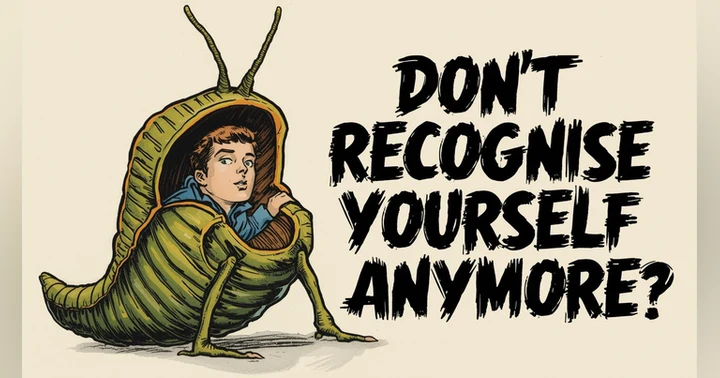
 Don’t Recognise Yourself Anymore? This Might Explain It

Do you ever feel like you've changed so much that you barely recognise yourself anymore? As life becomes more demanding, it's common to feel uncertain about who you are, where you're going and whether you're still the same person you used to be.
In this episode of Headstraight, we explore why periods of change can leave people feeling disconnected from themselves and why self doubt often appears when life starts moving faster than your sense of identity can keep up. You'll learn how comparison, uncertainty and growing responsibilities can affect confidence and why feeling lost doesn't automatically mean something is wrong.
If you've been overthinking your future, questioning yourself or feeling unsettled by the person you're becoming, this episode offers practical guidance to help you understand what's happening and find your footing again.
Headstraight is a teen mental health podcast providing practical mental health support for teens and young people.
Want to get involved?
I’d love to hear from you:
- Send me a message → headstraight.co.uk/contact
- Leave me a voice note → headstraight.co.uk/voicemail
- Share your feedback by leaving a review (it helps more young people find the podcast) → headstraight.co.uk/reviews/new
Explore more from Headstraight:
- Read the blog version of every episode, packed with extra insights on self-sabotage, motivation, resilience, and mental health → headstraight.co.uk/blog
- Find out more about me, the host, and why I started this podcast → headstraight.co.uk/about
Need support right now?
If you’re struggling with anxiety, depression, or in crisis, visit our Resources page - https://www.headstraight.co.uk/p/resources/
for helplines, mental health services, and support options available in the UK and across the world.
Headstraight: Mental Health Support for Teens is built on honest conversations — proper Mental Health real talks that make sense in real life. Each episode brings real talk mental health guidance designed to offer steady support for teens navigating the messy, complicated parts of growing up. If you’re looking for a teen mental health podcast that gives grounded support, you’re in the right place.
My name's Mark and you're listening to Headstraight. Hello, you lot, and welcome back. Today, we're gonna be talking about what it's like when you don't quite recognise yourself anymore. Because there's a point when life stops waiting for you to feel ready and most people don't notice when it happens. Things just start changing.
Mark:You're expected to make decisions, handle things, keep on top of stuff that actually matters now. Money, work, people, your future. And on the outside, you're getting on with it. You're turning up, you're doing what needs to be done, keeping things moving. But on the inside, it doesn't feel like it lines up.
Mark:Because there are moments, and they're quiet ones, when you stop and think, I don't feel like myself anymore. And it doesn't happen in a dramatic way. It's not like everything's falling apart. It's just a steady, uncomfortable sense that something's off. Maybe the way that you think feels different.
Mark:The way that you see things has shifted. Stuff that used to matter doesn't land the same anymore. And at the same time, you're being asked to do more than you used to do. Make decisions, figure things out, know what you're doing even when you don't feel clear at all. And that's the part that gets to you because it's not just I don't know who I am.
Mark:It's I don't know who I am, but I've still got to get on with life anyway. You've still got to show up, still reply to people, still make choices, still keep things moving forwards. And when you look around, it feels like everyone else is managing better than you are. They look more certain, more settled. It's like they've got some kind of direction.
Mark:And you're sitting there thinking, how are they doing that? Why don't I feel like that? Am I behind here? So you start trying to fix it. You think it through.
Mark:You question yourself. You try and work out who you're supposed to be now. And the more that you push for answers, the less clear it feels. And after a while, it stops feeling like a question and starts feeling like a problem. Like you've missed something.
Mark:Like you should have figured it out by now. Like you've somehow drifted away from yourself and you're not sure how to get back. So let's just pause there for a second. Because if that's where you are right now, feeling like you don't quite recognize yourself anymore whilst life's still expecting you to show up and get on with it, then that's not you getting it wrong. That's you hitting a point that almost everyone reaches when life starts getting real.
Mark:So let's make sense of this because this feeling doesn't just appear for no reason. What's changed isn't you. It's your life. At some point, and it's different for everyone, life shifts out of that structured guided phase into something a lot more open and a lot more demanding. Before, things were more laid out for you.
Mark:You had a system around you. Maybe it was school, college, people telling you what mattered, what came next, what you should be working towards. And even if you didn't like it, it gave you a shape. Now, that structure starts to drop away, and in its place, you get something else. Choice, responsibility, expectation.
Mark:You've got more freedom, but that freedom comes with pressure. Because now you're the one who has to decide what am I doing? Where am I going? What actually matters here? And no one really hands you those answers.
Mark:At the same time, the stakes feel higher. Decisions don't feel small anymore. They feel like they count. Money starts to matter. Time starts to matter.
Mark:The direction that you're heading in starts to matter. And all of that builds this quiet pressure in the background. Now it's not always loud and not always obvious, but it's definitely there. And while all of that is happening on the outside, something else is happening on the inside. The version of you that made sense before was built for a different stage of your life, different environment, different expectations, different priorities.
Mark:And now that environment has changed, and that version of you doesn't quite fit anymore. Not because there's anything wrong with it, but because it hasn't caught up yet. So what you're left with is this mismatch. Your life has moved forwards, but your sense of who you are hasn't fully moved with it yet, And that's why it feels off. It's not just uncertainty.
Mark:It's that you're trying to live with a version of life that your identity hasn't fully adjusted to. And that gap? That's right where the tension sits. That's where the second guessing comes from. The overthinking.
Mark:The comparing. The feeling like you're not quite getting it right. Because you're trying to operate in something new without feeling like you've fully found your footing yet. And most people hit that point and make it personal. They assume, well, this must be me.
Mark:I should be better at this by now. Other people seem fine. Why don't I feel like that? But this isn't about you getting it wrong. This is what it looks like when your life changes faster than your identity can keep up with, and no one really prepares you for that.
Mark:And this is the part that really gets to you Because this gap that we're talking about, you don't get to sit outside it and figure it out calmly. Because you're living in it every day. You wake up, and it's still there. You go to work or college or whatever you're doing, and it's still there. You're talking to people, making plans, replying to messages, and underneath all of that, the same feeling is running in the background.
Mark:I don't quite feel like myself. I'm not sure I've got this right. But you don't get to stop. That's the difference now. Before, if things felt off, you had space.
Mark:Time to think, time to reset, time to fall back into something familiar. Now, life keeps moving. There are things that you have to deal with. Decisions that need making, people expecting answers, situations that don't wait for you to feel ready. So you find yourself doing something strange.
Mark:You keep showing up on the outside whilst feeling unsure on the inside. You say yes to things you're not fully certain about. You make decisions that you don't feel confident in. You go along with plans whilst quietly second guessing yourself. And from the outside, it probably looks like you're handling it.
Mark:But inside, it doesn't feel steady. It feels like you're holding it together, like you're just about keeping up, And that can be exhausting. Because you're carrying two things at once the pressure of real life and the uncertainty of not feeling fully like yourself inside it. And when those two things sit together for a while, your brain starts looking for an explanation. It tries to make sense of the discomfort, and most of the time, it lands on the same conclusion.
Mark:I must be getting this wrong. I'm not as capable as I should be. Everyone else seems to be managing this better than me. So the doubt builds. Not because you're doing badly, but because nothing feels fully settled yet.
Mark:And the more unsettled it feels, the more you start watching yourself, second guessing, overanalyzing, trying to check if you're doing life properly. But the problem is there isn't a clear version of properly at this stage. There's just movement. And that's what makes this face so uncomfortable. You're doing real life without feeling fully grounded in who you are inside it.
Mark:And no one really tells you that this part, this is where most people feel like they're winging it. So let's just steady this for a minute because it's very easy at this point to come to the wrong conclusion. When things feel this unsettled, when you don't feel fully like yourself, when you're second guessing what you're doing, it's natural to think, I'm not handling this properly. I should be coping better than this. But that's not what's going on here.
Mark:What you're feeling is what this stage actually feels like. This point where life becomes more real, more open, and more demanding. It doesn't come with clarity. It comes with uncertainty. And not the kind that you can just sit and think your way out of.
Mark:The kind where you're figuring things out while you're already in it, making decisions before you feel ready, learning as you go, adjusting in real time. And because it doesn't feel clear, because it doesn't feel settled, your brain reads it as, hang on. Something's wrong here. But unclear doesn't mean wrong. Unsettled doesn't mean failing.
Mark:It means you're in the early stages of something, and early stages never feel solid. They feel like this. A bit uncertain, a bit uneven, a bit like you're not fully sure of your footing yet. But that's not a flaw, that's the reality of building something new. Because the version of you that fits this stage of your life isn't something you suddenly figure out in one go.
Mark:It gets shaped through what you do, through the decisions that you make, the things that you try, the stuff that works, and the stuff that doesn't. And while that's happening, it's gonna feel incomplete because it is. You're not supposed to feel fully certain at this point. You're supposed to be right in the middle of working it out, and that's a very different thing from getting it wrong. So instead of asking yourself, why don't I feel like I've got this sorted?
Mark:A better way of looking at it is this. Of course, this feels uncertain. I'm still building it. And when you see it like that, something shifts. You stop treating the feeling like a problem that needs fixing and start recognising it as part of the process that you're in.
Mark:Not comfortable, but not wrong either. So if this is the stage that you're in, what actually helps? Not in a big life changing fix it all kind of way. Just in a way that steadies things a bit and stops you getting stuck in your own head. Well, the first thing is stop asking yourself, who am I?
Mark:That question sounds useful, but at this point, it usually just sends you in circles because you're trying to come up with a clear answer before you've had enough experience to build one. And all that does is push you back into overthinking. Instead, shift the question slightly from who am I to what am I moving towards? Not perfectly, not permanently, just what feels like the next step in the right direction. Because identity at this stage isn't something you define in your head.
Mark:It's something that starts to take shape through what you do. Second thing. You don't need to have full clarity to make a decision. That's a trap a lot of people fall into. They wait until something feels certain before they move.
Mark:But if you're waiting for that feeling, well, you're gonna be waiting for a really long time. Most of the time, the decision comes first and the clarity follows later. So instead of asking, is this definitely right? A better question to ask is this, can I live with this choice for now? Because that's what this stage is.
Mark:Not perfect decisions, but decisions that you can stand by long enough to learn something from them. And the third thing is, you're allowed to outgrow parts of your life without having a full replacement ready. Now that's a big one. Because a lot of the discomfort comes from trying to hold on to things that don't quite fit anymore. Old roles, old expectations, old ways of seeing yourself.
Mark:And instead of letting them loosen, you try to force yourself back into them just to feel a bit more certain again. But that doesn't really work. It just keeps you stuck between two versions of yourself. So sometimes what helps most is simply recognizing that doesn't fit me in the way that it used to and leaving it there without rushing to replace it. Because not having everything filled in yet is part of how this stage works, not a sign that you're doing it badly.
Mark:So if you take nothing from this episode, I want you to take this. That feeling of not quite recognizing yourself anymore, it doesn't mean that you've lost who you are. It means that your life has changed and you're still catching up with it. And that takes time, not because you're slow, not because you're behind, but because this part of your life isn't something that you figure out all at once. It's something that takes shape as you move through it.
Mark:Through the decisions that you make, the things that you try, the situations that you find yourself in. Now some of it will fit, some of it won't. And slowly, without you even noticing it happening, things will start to settle. Not perfectly, but enough that makes you feel more like yourself again. So if right now things feel a bit unclear, a bit unsettled, a bit like you're not quite sure where you stand, that doesn't mean that you're off track.
Mark:It means that you're in the middle of something that hasn't fully formed yet. And you don't need to rush that. You just need to keep showing up inside it. One decision at a time, one step at a time, one experience at a time, and let it build from there. Because you haven't lost yourself.
Mark:You're still becoming someone who fits the life that you're now in, and that takes a bit more time to straighten out. And before you go, just try this over the next few days. Notice one thing that you're still trying to hold on to that doesn't quite fit anymore. Maybe it's a label, a role, an expectation, something that used to make sense, but now feels a bit forced. And instead of trying to put yourself back into it, just leave it alone for a bit.
Mark:You don't need to replace it straight away. You don't need to figure out what comes next. Just notice it and stop trying to make it fit and see what shifts when you do that. And that beautifully leads us straight into the next problem. Because if you don't fully know who you are yet, how are you meant to make big life decisions?
Mark:The kinds that actually matter uni, work, relationships, direction. When everything feels uncertain, those decisions can feel massive. So in the next episode, we're gonna properly break that down. We're gonna look at how to make decisions without freezing, without spiraling, and without feeling like you've gotta get it perfect. So are you up for it?
Mark:Of course, you are.